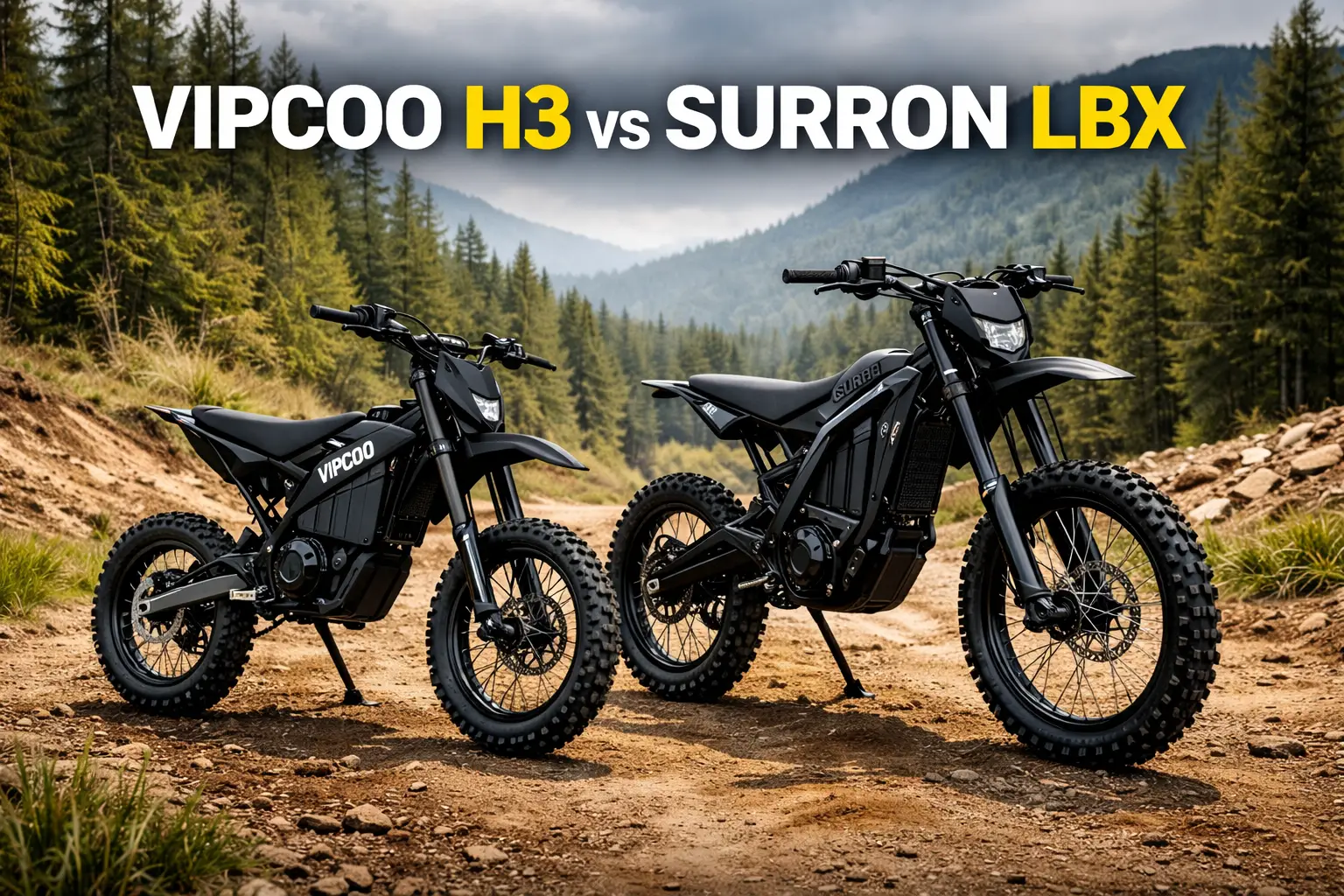
Vipcoo H3 vs Surron LBX: Brutally Honest Comparison for Riders
A technical and real-world comparison of power, handling, maintenance costs and rider suitability.
Interest in Vipcoo H3 Vs Surron LBX continues to grow as electric dirt bikes gain popularity across the UK. This comparison focuses on factual specifications and practical considerations rather than hype.
If you want more background on the Vipcoo brand and models, our VIPCOO Buyers Guide is a good starting point.
Surron is widely recognised for stronger performance and established build quality, while Vipcoo is a relatively new entrant emphasising affordability and accessibility. The two bikes are aimed at different riders, so understanding the specifications and real-world experience is more important than headlines.
Surron’s seat height compared to Vipcoo
The Surron LBX has a published seat height of 32.6 in (83 cm). That makes it comparable to a mid-sized motocross bike and more suitable for riders who are comfortable with taller saddles.
Vipcoo is 31.5 in (80 cm) its smaller 14 in / 12 in wheel setup means the saddle typically sits lower to the ground, which can help shorter riders reach the floor more comfortably.
The H3 is listed at around 57 kg net weight, so manoeuvring it at standstill can still feel “proper bike” rather than toy-like.
In practice, the larger wheels and taller stance on the Surron offer more ground clearance for technical terrain, while Vipcoo’s lower stance can boost confidence when learning slow-speed balance.
Vipcoo H3 vs Surron LBX top speed
Surron equips the 2025 Light Bee X with an 8 kW peak power system and a 60V / 40Ah removable battery. The manufacturer lists a top speed of 46.6 mph and a quoted range figure based on a standardised test cycle.
Vipcoo’s H3 is listed with a 4500W peak power and a 48V / 23Ah battery. With a max speed of 39 mph.
Surron’s handling compared to Vipcoo
Vipcoo H3 vs Surron LBX, handling is not just suspension quality; weight, wheel sizes, geometry, and power delivery all play a role.
The Surron LBX runs a more “full-size” e-moto wheel setup (larger wheels and tyres) and a longer wheelbase. That tends to deliver better high-speed stability, more rollover capability on rough ground, and a more planted feel when the trail gets choppy.
Vipcoo’s smaller wheels make it feel more agile at lower speeds and easier to turn tightly. On loose surfaces, that nimbleness can help newer riders correct mistakes quicker, especially when they’re still developing balance and throttle control.
In short: Surron leans toward high-speed stability and trail authority; Vipcoo leans toward approachable handling and confidence at moderate speeds.
Comparing the two bikes
A quick technical comparison helps highlight why Vipcoo H3 Vs Surron LBX isn’t truly a direct like-for-like contest:
- Power & battery: Surron’s system is higher output with a larger 60V battery platform, while Vipcoo runs a lower-output system designed to be more approachable.
- Speed & range: Surron lists higher top speed and longer riding potential under test conditions; Vipcoo lists lower speed with a range figure that can suit casual sessions.
- Ergonomics: Surron’s 32.6-inch seat height suits adult riders; Vipcoo’s smaller wheel setup tends to feel lower and easier to manage for beginners.
- Aftermarket support: Surron has a huge upgrade ecosystem; Vipcoo’s ecosystem is smaller, with more reliance on OEM parts.
Why buy a Vipcoo H3 vs Surron LBX
Vipcoo appeals to riders who value ease of use and affordability. Its lower power output and smaller wheels can make it less intimidating while still delivering proper off-road fun.
When comparing a Vipcoo H3 vs Surron LBX for beginners, confidence often develops faster on lower-power machines because the bike feels “forgiving” when learning throttle control and slow-speed balance. Many electric dirt bikes are designed to support progression through smooth power delivery and beginner-friendly behaviour.
From a cost perspective, Vipcoo’s entry point is usually lower, and the lower performance ceiling can reduce wear on consumables like tyres and chains when used casually.
Why buy a surron over a vipcoo
Surron is the better choice for riders seeking higher performance and a more established platform. It is built to handle higher speeds, rougher terrain, and more aggressive riding styles.
The bigger aftermarket scene is a major advantage too. Owners can tailor the bike toward their preferred riding style, whether that means improving braking performance, tuning throttle feel, or supporting harder off-road use.
Running costs: tyres, chains and maintenance
The Vipcoo H3 vs Surron LBX still need routine checks to stay safe and reliable. Even though electric bikes have fewer moving parts than petrol bikes, consumables and safety checks still matter.
Typical running-cost areas include:
- Tyres: More speed and torque generally means faster tyre wear. Surron riders who ride hard or on rough terrain can expect tyres to wear quicker than casual Vipcoo riding.
- Chain & sprockets: Regular cleaning and lubrication helps reduce wear, especially if you ride in wet or muddy conditions.
- Brake pads: Faster bikes typically consume pads quicker, especially with heavier braking. Keeping calipers clean improves braking consistency.
- General checks: Bolt checks, suspension inspection, tyre pressure, and cable/wiring checks should be part of your routine.
- Parts availability: Surron generally benefits from wider dealer support and third-party stockists. Vipcoo parts may be more OEM-led, which can affect lead times.
Upgrade potential
Surron’s biggest advantage (beyond performance) is how easy it is to customise. Many owners upgrade components to match how they ride, such as improving suspension for jumps, improving braking for harder riding, or improving range for longer sessions.
Vipcoo has a smaller upgrade ecosystem, so most improvements are likely to be maintenance-focused (keeping tyres, brakes and drivetrain in good order) rather than heavy performance tuning. That said, for many starter riders, upgrades are not essential — learning time on the bike matters more than chasing extra speed.
Learning curve: how rider confidence develops
For beginners, a lower learning curve usually comes from three things: manageable power, predictable throttle response, and a bike that’s easy to correct when you make a mistake.
Beginner-focused electric dirt bikes often allow riders to start at lower speeds and build up gradually, and the smooth, linear response of electric power can feel less intimidating than a sudden surge.
That’s where Vipcoo can shine: it gives new riders a platform to build confidence without the “too much bike too soon” feeling. Surron can still be beginner-friendly in the right hands, but the performance ceiling is much higher, so progression needs to be more deliberate.
Conclusion
The Vipcoo H3 Vs Surron LBX debate is not about which bike is universally “better,” but which bike is better for the rider.
Surron is the stronger choice for experienced riders who want performance, stability, and a massive upgrade ecosystem. Vipcoo is a sensible entry point for newer riders who want something approachable and fun without the premium cost.
If you’re still weighing things up, revisit our VIPCOO Buyers Guide for a clearer picture of where Vipcoo sits in the wider electric dirt bike market, and which riders it suits best.
Send us a message!
Our Latest Products
-
Sale!
 79Bike Falcon Pro 2. Purple Edition. Exciting 10kW Electric Dirt BikeAdd to basket
£4,199.00Original price was: £4,199.00.£3,495.00Current price is: £3,495.00. -
Sale!
 79Bike Falcon GT. Yellow Edition. Responsive 16kW Electric Dirt BikeAdd to basket
£5,199.00Original price was: £5,199.00.£4,499.00Current price is: £4,499.00.